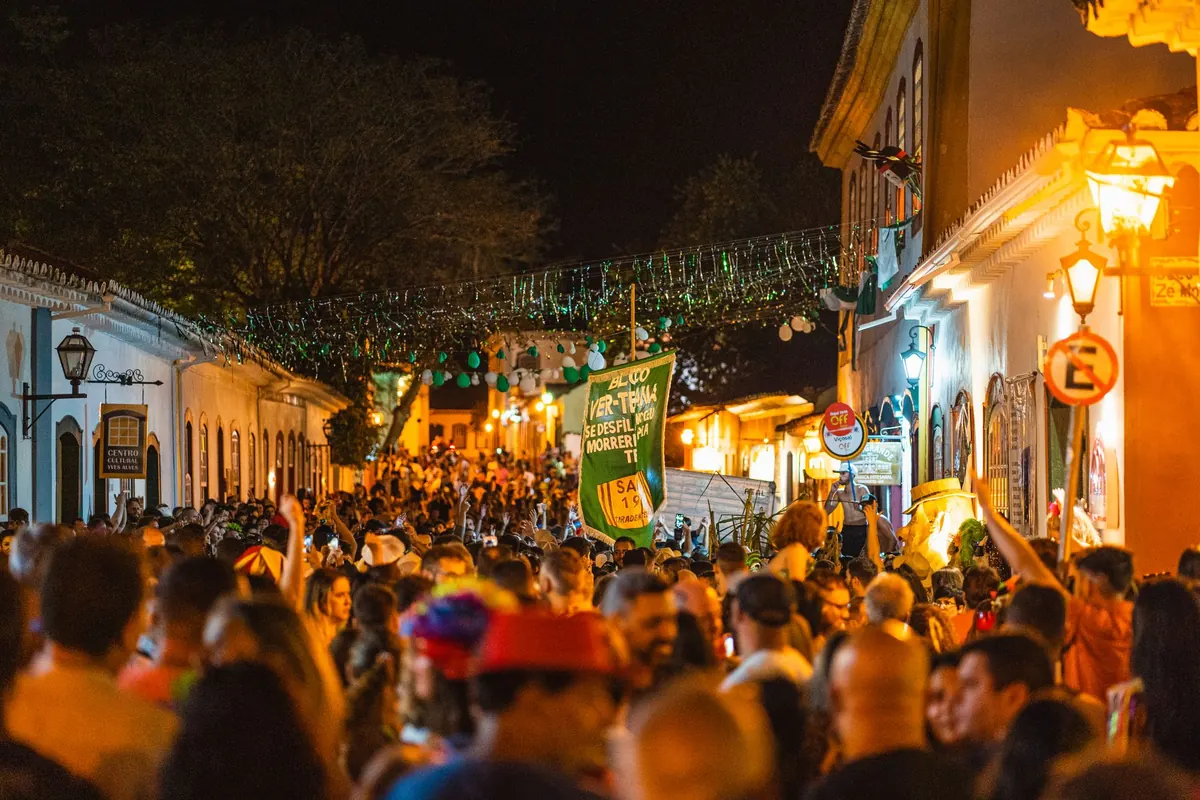
Every summer the same article appears in a dozen local outlets. A brass band, a procession, a stall selling fried dough, a child waving a paper flag, and a closing line about tradition being alive and well. The photographs are lovely. The piece tells you almost nothing. Festival coverage is one of the easiest assignments in local journalism and one of the easiest to get wrong, because the format invites shorthand: colour instead of context, atmosphere instead of accounting, a tone borrowed from a tourism office rather than a newsroom. Below are the mistakes that show up most often, and the reporting habits that fix them.
The postcard reflex
The first mistake is structural. The reporter arrives on the final evening, gathers three sentences of atmosphere, and writes backwards from the closing line. What results reads like a brochure with a byline. Nobody learns who paid for the stage, whether the street was closed legally, or why the procession took a different route this year.
Try starting from a fact that would matter to someone who never attends. The festival moved a week earlier because the square is being repaved. The organising committee lost its treasurer in March and has not replaced her. The stage is smaller than last year because the quote for the larger one came in higher than the grant. Any of these gives you a spine, and the colour then hangs off something instead of floating.
A festival is a budget, a timetable and a set of neighbours. Get those three on the page before you write about the smell of fried dough.
Residents are not scenery
Locals appear in festival copy in two interchangeable roles: the cheerful stallholder with a one-liner, and the elderly resident recalling how it used to be. Both are real people, and both are being used as decoration. The fix is unglamorous. Knock on doors within earshot of the stage. Ask what time the music stopped, where people parked, whether the bins were emptied on Monday. Talk to at least five residents, and make sure one of them is unhappy — not to manufacture conflict, but because the person who could not sleep is as much a part of the event as the person who danced.
Ask specific questions rather than inviting general reminiscence. "What has changed since the committee took over?" beats "What does this festival mean to you?" Get full names, ages where relevant, and occupations, so that your sources read as individuals. Drop "the locals" as a collective noun; it flattens a street of different households into a chorus.
Follow the money, at least a little
Most festival pieces mention costs only as an adjective — "the costly event", "a shoestring budget" — with no figure and no source. That is a missed story and a small failure of accuracy. Ask the organisers for the total budget, the municipal contribution, sponsor arrangements, and what the bar and ticket takings cover. Ask about insurance, security, music licensing, waste collection and any overtime for municipal staff. You will not always get answers, and that is itself reportable: "The committee declined to provide a budget breakdown" is a sentence that does its job.
Where public money is involved, minutes and spending decisions are usually obtainable, and a festival funded from a council budget is a legitimate subject for scrutiny. Be careful with figures you cannot verify. If a number comes from one source and cannot be checked, attribute it plainly and say so. Do not round, and do not estimate a crowd size unless someone actually counted.
Questions that usually work
- Who decided the date, and could it have been moved?
- What is the total budget, and which part is public money?
- Which costs rose this year, and by how much?
- Who is insured if something goes wrong?
- How did you count attendance, and what number did that method produce?
Tensions are the story, not the scandal
Noise complaints, parking, volunteer burnout, the choice of food stalls, the balance between religious and secular elements, accessibility for wheelchair users, the shrinking pool of people willing to run the committee for another year: these are the substance of a festival, and they are routinely left out because they spoil the mood. They do not have to. A disagreement reported plainly — who objected, what they asked for, what the organisers did — is more respectful to everyone than silence, and far more useful than a feud.
Resist the temptation to frame criticism as ingratitude. The resident complaining about amplified music at midnight is not attacking tradition; she is describing her Tuesday. Ask what process existed for complaints, whether anyone used it, and what changed afterwards. That question turns a gripe into a small piece of civic reporting.
Organisers are sources, not press officers
Committees usually send a press release with superlatives and a programme. Take the programme, verify the superlatives. "Record turnout" needs a counting method. "Younger than ever" needs an age breakdown or a quote from someone under thirty who is not on the committee. Ask what went wrong last year and what they fixed. Ask what they would change if they had the money. Ask to speak to a volunteer who has done the same job for a decade, and to one who started this year; the difference between those two interviews is usually your best material.
Also check the boring things: the correct spelling of surnames, the official name of the association, whether the event is in its forty-first or forty-second edition, whether the street is a via or a piazza. Errors here are noticed instantly by the people who care most about the piece.
Craft notes that lift the copy
Write from a place, not from a mood. Name the street, give the time the band started, describe what the sound is like from a bedroom two floors up. Use numbers where you have them and silence where you do not. Be suspicious of "traditional" as a bare adjective: whose tradition, since when, and who decided? Avoid recycling last year's opening paragraph with a new date — readers in small towns notice, and so do the organisers.
Before you file
Read your first three paragraphs and ask whether a reader who stayed home all weekend would learn anything. Check that at least one resident, one organiser and one figure appear in the piece. Confirm every number with the person who gave it to you, and note in your copy when a figure could not be confirmed. Make sure the final paragraph does not simply announce that the festival was a success. If the piece could be published next year with the dates changed, it is not finished.
Then call the committee treasurer one last time. That conversation, five minutes before deadline, is where the actual story usually lives.
Photo: Douglas Mendes / Pexels