Common Mistakes When Translating Political Quotes from Italian to English
Italian political language is compact, allusive and often theatrical. A single phrase can carry a party’s history, a legal warning or a calculated insult. When that phrase crosses into English, the danger is not only mistranslation; it is a story that sounds sharper, softer or simply wrong. A quote that was cautious in Italian can become reckless in English. A deliberately vague statement can acquire a culprit it never named. An insult that depended on tone, timing and a shared political memory can land as a bland adjective or, worse, as a false accusation. Translating political quotes is therefore not a word-for-word exercise. It is an act of reconstruction: the translator has to recover the speaker’s position, the audience’s expectations, the institutional context and the emotional temperature of the original, then rebuild all of that in English without adding a story that was never there.
The most common mistakes tend to cluster around a few familiar pressures: the temptation to translate literally, the urge to make Italian politics sound more orderly than it is, the failure to recognise false friends, and the tendency to explain so much that the quotation disappears under commentary. Each mistake is understandable. Italian political language is full of shorthand, and English readers often need help. But help can become interference if the translator stops listening to the original voice.
The Seduction of Literal Translation
Literal translation is the first trap because it feels honest. The words are there, in order, and the translator has not invented anything. Yet political phrases rarely mean what their component words mean. Italian coalition politics is full of expressions about hands, doors, tables and fields, and English has its own metaphors for the same ideas. The translator’s job is to find the English metaphor that does the same political work, not to preserve the Italian image at the cost of the meaning.
“Il governo ha le mani libere.” Literal: “The government has free hands.” Better: “The government has a free hand” or, in coalition reporting, “The government is not bound by coalition constraints.”
The literal version sounds as if the government has just washed its hands or has no gloves. The idiomatic English version preserves the idea of freedom of action, but it may still be too vague. In Italian, mani libere often signals that a government is no longer tied to a coalition partner, a parliamentary group or a previous agreement. A good translation will therefore ask: free from what? If the surrounding sentence makes the constraint clear, “has a free hand” may be enough. If not, the translator may need a brief gloss outside the quotation: “The government has a free hand — that is, it is no longer bound by its coalition agreement.” The mistake is not choosing the literal phrase; it is leaving the English reader to guess which kind of freedom is meant.
The same problem appears with institutional terms. Presidente del Consiglio is not “President of the Council” in ordinary English political reporting; it is the Prime Minister. Onorevole is not “Honorable” in the moral sense; it is the title of a member of the Chamber of Deputies, and “MP” or “the deputy” is usually clearer. Manovra is not a “maneuver” in the military or tactical sense; in budget reporting it is a financial package or budget law. Decreto legge is a decree-law, not simply a “decree.” Fiducia is confidence, but questione di fiducia is a confidence motion or confidence vote. These are not decorative details. They tell the reader what kind of political act is being described.
Losing the Register: Titles, Honorifics and Tone
Italian political quotes often depend on register. A speaker may use lei to create distance, tu to claim intimacy or superiority, or an honorific to signal respect, irony or aggression. English has fewer formal pronouns, so the translator has to carry that relationship through verbs, vocatives and sentence rhythm. Titles are especially treacherous. Onorevole can be a neutral parliamentary title, but in a heated exchange it can also sound stiff, mocking or old-fashioned. Translating it mechanically as “Honorable” may make an Italian deputy sound like an American judge or a moral philosopher.
Nicknames are another register problem. Italian political journalism loves labels such as il Cavaliere, il Professore, il Capopopolo or il Leader. These are not neutral descriptions. Il Cavaliere evokes Silvio Berlusconi’s self-presentation and media persona; il Professore can evoke a technocratic or academic style, often with irony; capopopolo suggests a tribune of the people, not simply a “populist leader.” A translation that turns every nickname into a flat job description loses the wink. A translation that over-explains every nickname turns the quotation into a footnote. The best solution is usually to keep the nickname if the article has already established it, and to gloss it once in the surrounding prose.
False Friends and Party-Coloured Words
Political vocabulary is full of false friends because parties and institutions develop their own dialects. Riformista does not always mean “reformist” in the bland English sense; it can identify a specific tradition within the Italian left or centre-left. Moderato may mean “moderate,” but it can also signal a coalition position rather than a temperament. Populista is often used pejoratively in Italian journalism, while “populist” in English can be descriptive or analytical depending on the outlet. Governo tecnico is usually a technocratic government or caretaker administration, not a “technical government.” Lottizzazione is not merely “allocation”; it is the partisan division of public appointments, often translated as “spoils-sharing” or “party apportionment.” Sottogoverno is not a “subgovernment” in the constitutional sense; it suggests a parallel network of patronage and party influence.
The translator also has to watch for words that look ideological but function as labels. Sinistra and destra are left and right, but centrosinistra and centrodestra are coalition brands as much as ideological positions. Apertura a sinistra is not simply an “opening to the left”; it refers to the postwar strategy of bringing the centre-left into government. Compromesso storico is the “historic compromise,” but the phrase carries the specific memory of Aldo Moro and Enrico Berlinguer and the attempt to bring Communists into the governing majority. If the English reader does not know that history, the quotation may sound like a generic call for compromise. The translator does not need to write a lecture, but the surrounding sentence should give enough context for the phrase to do its work.
The Missing Backstory
Italian political quotes are often compressed history. A single word can refer to a scandal, a government, a slogan or a betrayal. Tangentopoli is not just “Bribesville”; it names the early-1990s corruption investigations that helped destroy the First Republic. Seconda Repubblica is not merely a chronological label; it marks a party system that emerged after those investigations. Ribaltone is not a “big overturn” in the literal sense; it is a political about-face, often a sudden coalition reversal. Inciucio is not a neutral “intrigue”; it is a pejorative term for a backroom deal, usually one that betrays a public promise. Governo balneare — literally a “beach government” — suggests a caretaker or summer administration, often with the implication that serious politics has been suspended.
The common mistake here is to translate the word but not the memory. The second common mistake is to over-correct by stuffing the quotation with brackets. A quote should still sound like a quote. If the context is essential, put it in the sentence before or after the quotation, not inside it. For example: “The deal was denounced as an inciucio — a pejorative Italian term for a shady backroom agreement — by opposition leaders.” That keeps the original word visible while giving the English reader a handle. If the article is for a specialist audience, a footnote may be better. If it is for a general audience, a short gloss in the flow of the sentence is usually enough.
Theatricality, Insults and Understatement
Italian political speech can be theatrical without being loud. A phrase may be ironic, mock-formal or deliberately understated. Translating volume is easy; translating intent is harder. An insult delivered with a smile is not the same as a shouted insult, and English punctuation cannot always reproduce the effect. The translator has to ask what the speaker is doing: reassuring, threatening, mocking, distancing, claiming victimhood or performing humility. The answer should shape the English verb and rhythm.
Consider scendere in campo, the phrase Berlusconi used in 1994 when he entered politics. Literally it means “to go down onto the field,” with strong football associations. “To enter the field” preserves the image but may sound abstract to English readers. “To throw his hat in the ring” is idiomatic but changes the sport. “To enter the fray” captures the combat but loses the football. There is no perfect solution. The translator has to decide which loss is acceptable and whether a brief gloss is needed. The mistake is pretending that the literal image and the political meaning are the same thing.
Syntax, Pronouns and the Politics of Ambiguity
Italian political sentences often rely on impersonal constructions, dropped subjects and long subordinate clauses. English wants subjects, verbs and clearer boundaries. A translator who preserves the Italian syntax too closely can produce English that sounds evasive, bureaucratic or simply unreadable. But a translator who tidies too aggressively can destroy a deliberate ambiguity. Si è deciso can mean “it was decided,” “we decided” or “the leadership decided,” depending on context. If the Italian is hiding the agent for political reasons, the English should not invent one. If the Italian is merely using a standard impersonal form, a more direct English sentence may be fair.
Pronouns matter too. Noi can be inclusive or exclusive: “we Italians,” “we in this party,” “we the government” or “we who are speaking for the country.” English “we” is equally flexible but less obviously marked. A quote that shifts from noi to il Paese may be making a claim about who speaks for the nation. The translator should notice those shifts rather than flattening them into a generic “we.” The same is true of popolo, gente, cittadini and elettori. They are not interchangeable. Each carries a different relationship between speaker and audience.
Quotation Marks, Legal Caution and Editorial Framing
Political quotes can be legally sensitive. A translation that adds “alleged,” “claimed” or “insisted” where the original had a simple “said” can change the editorial stance. Conversely, a translation that removes hedging can make a politician sound more certain than the Italian allows. English news conventions often require attribution and caution, but the translator should distinguish between the source’s caution and the outlet’s own framing. Square brackets should be used sparingly, and ellipses should not be allowed to turn a qualified statement into a slogan.
It is also important to keep the quotation’s boundaries clear. If the translator adds context inside quotation marks, readers may assume the speaker said it. If the translator paraphrases outside quotation marks, the quote can lose its force. The safest approach is usually to keep the quoted words as close to the original as English allows, then place explanation in the surrounding prose. The reader should always be able to tell what is being quoted and what is being explained.
A Practical Checklist for Translators
- Read the whole speech or interview. A single sentence can reverse its meaning when the next sentence supplies the condition, the concession or the joke.
- Identify the speaker, audience and date. A phrase used by a party leader at a rally is not the same as a phrase used in a parliamentary committee.
- Map the institutions. Check whether Presidente del Consiglio, Camera, Senato, decreto legge or fiducia is being used in its ordinary technical sense or as political shorthand.
- Decide the register before drafting. Is the speaker formal, ironic, aggressive, conciliatory or deliberately vague? Let that decision guide the English verbs.
- Preserve meaningful ambiguity. Do not invent an agent, a motive or a certainty that the Italian leaves open.
- Gloss references outside the quotation. Explain inciucio, ribaltone or compromesso storico in the surrounding sentence, not inside the quoted words.
- Read the English aloud. Political quotes are meant to be heard. If the translation sounds like a committee minutes, it probably has lost the voice.
- Back-translate key phrases. A quick mental return to Italian can reveal whether the English has added a judgment, softened an insult or sharpened a warning.
When to Annotate and When to Let It Breathe
Annotation is a tool, not a virtue. A short gloss can rescue a quotation; too much gloss can smother it. The test is simple: does the English reader need this information to understand what the speaker is doing? If yes, provide it briefly and place it outside the quotation. If no, let the phrase breathe. Political language often works through suggestion, and a translation that explains every suggestion can make the speaker sound more naive than the original. The aim is not to turn a political quote into a Wikipedia article. The aim is to give English readers the same access to the speaker’s meaning, tone and strategic ambiguity that Italian readers have.
The best translations of Italian political quotes are neither literal nor free. They are disciplined reconstructions. They respect the original’s compactness, but they do not worship it. They explain what needs explaining, but they do not explain away the politics. Above all, they remember that a quotation is not just a string of words. It is a move in an argument, and the translator’s task is to let that move be seen in English without changing the game.
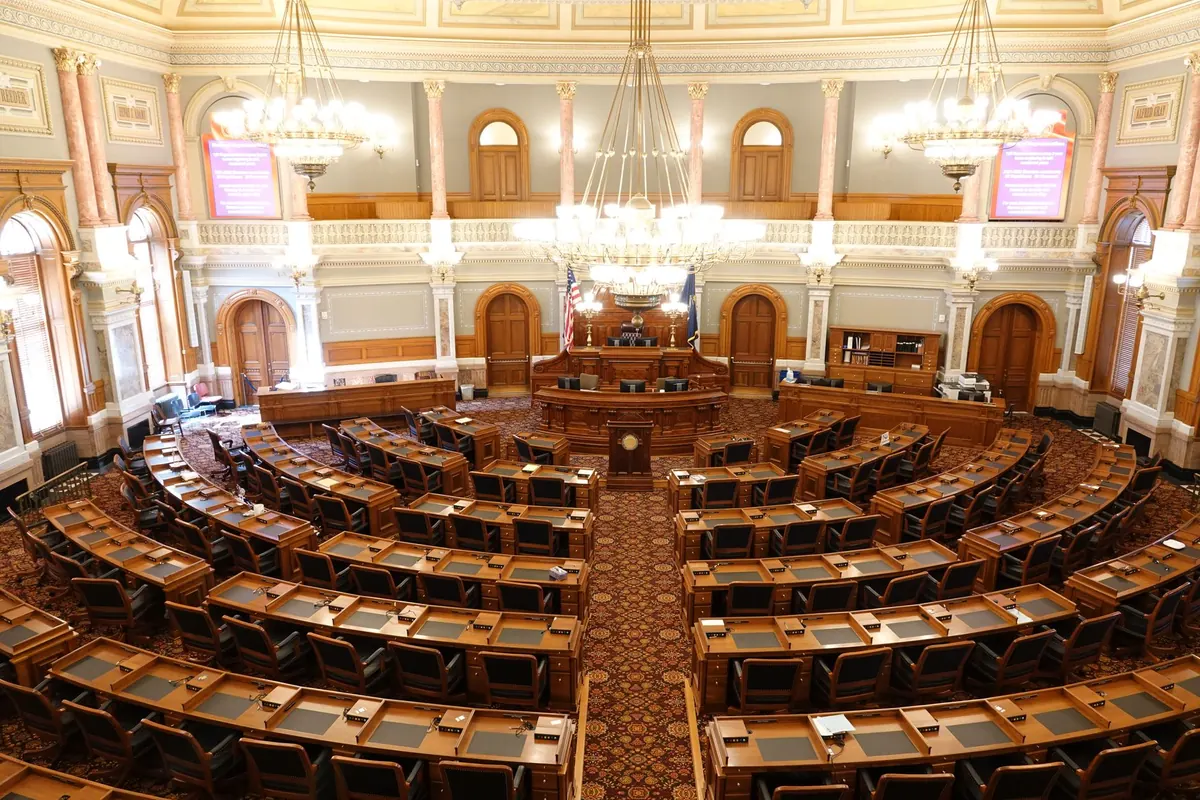
Photo: Tima Miroshnichenko / Pexels