At 7:40 on a Tuesday morning, a photo lands in the inbox: a collapsed boundary wall, a car half-buried in rubble, light that suggests early morning. The message says it was taken twenty minutes ago, three streets from the office. It might be the most important image of the week. It might also be a picture from another town, another year, forwarded by someone who sincerely believes it is true.
Both possibilities deserve the same treatment. Verification is not suspicion; it is the routine that lets you publish quickly and still sleep afterwards. What follows is the working method — the steps worth running on any reader-submitted photo before it goes anywhere near a local story.
Start with the person, not the picture
The image is only half of what you are checking. The other half is the person holding the phone. Before you spend twenty minutes on pixels, send three or four plain questions: Did you take this yourself? When, exactly? Where were you standing? Can you send the file as it came off your phone — not a screenshot, and not a forward through a messaging app that shrinks it?
People who took a photo almost always have more than one. Ask for the frames either side of it, a second angle, a few seconds of video, the view behind them. Someone who was genuinely there will produce them within minutes. Someone who lifted the picture from a group chat will go quiet, or send screenshots of screenshots — which is an answer in itself.
Then ask what they saw and heard, and compare that account with the picture. A witness who says police closed the road should be able to tell you roughly when the officers arrived. Small, boring details are hard to invent and easy to check.
Reverse image search, done properly
An image search is the fastest way to discover that a picture has been circulating since 2019. It is also the fastest way to be falsely reassured. Use it as a filter, not a verdict.
- Search the whole frame first, then a crop of the distinctive detail — the shop sign, the damaged building, the number plate area.
- Run it through at least two engines. Google Lens, TinEye, Bing Visual Search and Yandex Images index different corners of the web and will not always agree.
- Look for the earliest appearance. If an identical picture sits on a regional news site or a public page from three years ago, you are done: the photo may be real, but the claim attached to it is not.
- Read the old captions. The same image often travels with a different location each time, which tells you the caption is doing all the work and the picture none.
No results is not proof of originality. Photos taken an hour ago, images shared only in closed groups, and material from small local accounts can stay invisible to search engines for days. An empty results page means keep going, not publish.
Read the frame for location
Most local photos carry their address inside them if you know what to look for. Start wide and work inwards: hills, coastline, church towers, the shape of a roofline, the colour of the local stone. Then move to street furniture — bus shelters, lamp posts, bollards, bin colours, road markings — and finally to text: shop signs, street nameplates, house numbers, posters, the language and font on a van door.
Put those clues into a map. Satellite view confirms a building's footprint; Street View confirms the angle. If the photo shows a distinctive corner shop, find the shop and call it. A thirty-second conversation with the person behind the counter is often better evidence than an hour of squinting.
Light and shadow
Shadow direction and length can help pin down a time of day, especially when the caption makes a specific claim. Sun-position tools give you the angle of the sun for a given place and date. Treat this as supporting evidence rather than a trick: it works best with a clear vertical object of known height, a known date and an open view. On a flat, overcast street scene it will tell you almost nothing.
Metadata is a lead, not a proof
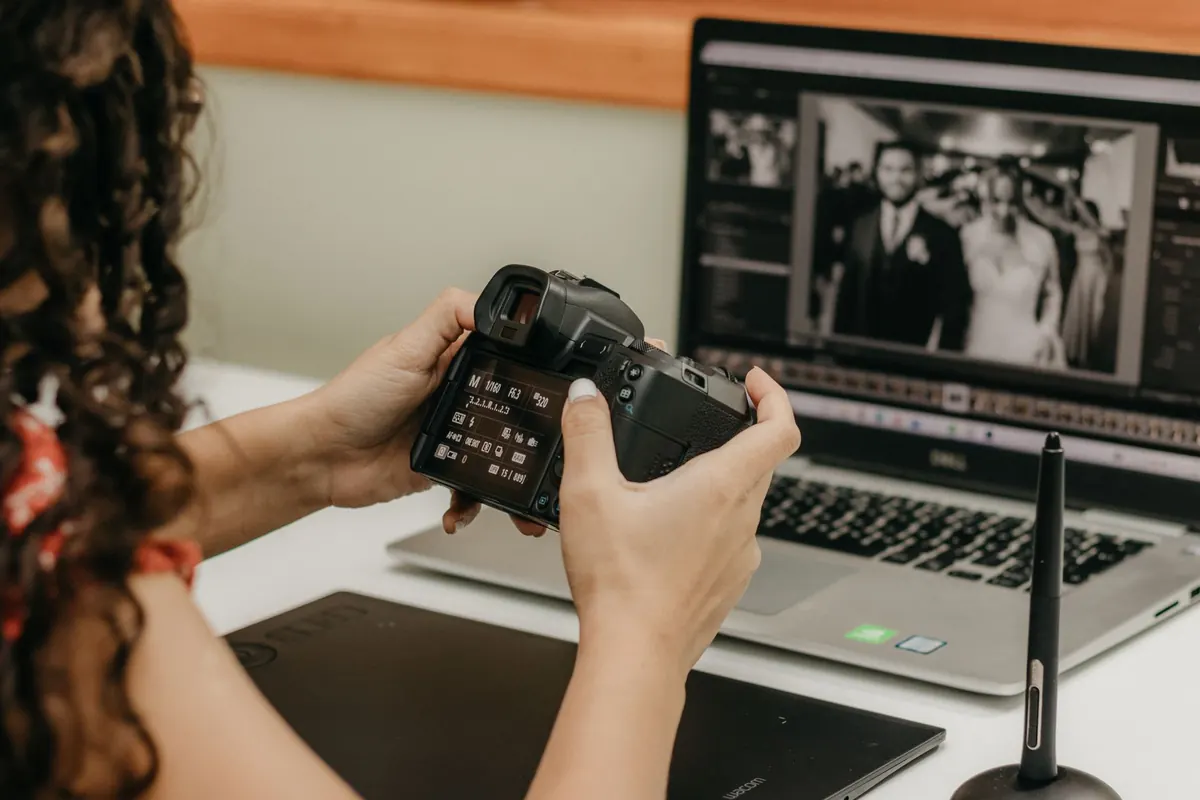
Original files sometimes carry EXIF data: camera model, timestamp, occasionally GPS coordinates. That is genuinely useful. A coordinate pair that lands on the right street is a good sign, and a timestamp that matches the weather is better still.
It is also fragile and easy to fake. Most social platforms strip metadata on upload. Screenshots never had it. Anyone can edit the tags in a couple of minutes, and phone clocks are set wrongly more often than you would expect, particularly after travel or a manual time-zone change. So a clean metadata record strengthens a story you have already verified by other means; a missing or contradictory one is a reason to ask more questions, not a reason to spike the photo.
Check the world around the picture
Photos do not happen in isolation, and the physical world keeps records. If the caption says it was raining, look at the weather archive for that hour. If it says the market was packed, check whether the market runs that day. If the claim is a fire, a flood, a crash or a closure, ask the people who would know: the fire service press office, the local police, the council, the business itself, the bus operator whose route passes the scene.
Then look for the same event from another angle. Two independent photographs of the same corner, taken minutes apart, are worth more than any amount of close reading of one. If a video is circulating, check its sound, its reflections, the sequence of the action — and whether an unrelated account has posted the same clip.
Watch for contradictions a local reader would spot instantly: summer clothing in a winter scene, snow that never fell, a shop that closed two years ago still trading in the frame, a car model not sold in the country, a number plate from another region.
When the picture is real and the caption is not
This is the most common failure and the hardest to see, because everything about the image feels authentic — because it is. The photograph was taken, just not where or when the message says. Recycled images of floods, storms, accidents and fires resurface with every new event, usually shared in good faith by people who saw them in a group chat.
Two habits catch most of them. Search for the earliest appearance of the image and check the date. Then ask the person who sent it where they got it, and keep asking until you reach someone who says "I took it". If that chain ends at "a friend sent it to me", you have a lead, not a photo.
A short checklist before publishing
None of this needs to take an hour. For a single photo in a local story, most of it fits into the time it takes to drink a coffee.
- Original file obtained, not a screenshot or a compressed forward.
- Sender's account matches the picture, and they can supply a second image.
- Reverse search run on the full frame and one crop, through at least two engines.
- Earliest appearance dated, and its old caption checked.
- Location confirmed by at least two independent visual clues.
- Time and weather consistent with the claim.
- One official or on-the-ground source contacted.
- Caption written to say exactly what is known, and nothing more.
If two or three of those boxes stay empty, the story is not ready. The photo might be true. That is not the same thing.
If you still cannot confirm it
Sometimes the honest answer arrives five minutes before deadline: the photo is probably genuine, and you cannot prove it. Give the reader that, in plain words. Describe what you have seen, say where it came from, state what you have and have not been able to confirm, and keep the caption narrow — "a photo shared with this newspaper appears to show…" rather than a flat assertion. If the image is central to the story and the claim is serious, hold it. A missing picture costs you a few hours; a wrong one costs you the trust of the people who called you first.
Then do the unglamorous thing and follow up the next morning. Verification is rarely one decisive check. It is a small pile of consistent details, gathered by someone who bothered to ask.
Photo: Kawê Rodrigues / Pexels